Weather Forecasting
Weather forecasting built for the night sky.
A 16-day astronomical forecast for every observing site – cloud cover by deck, computed seeing and transparency, wind, dew risk, and one combined night-quality score. Decide whether tonight is worth opening the dome before you ever leave the couch.
One Chart, the Whole Story
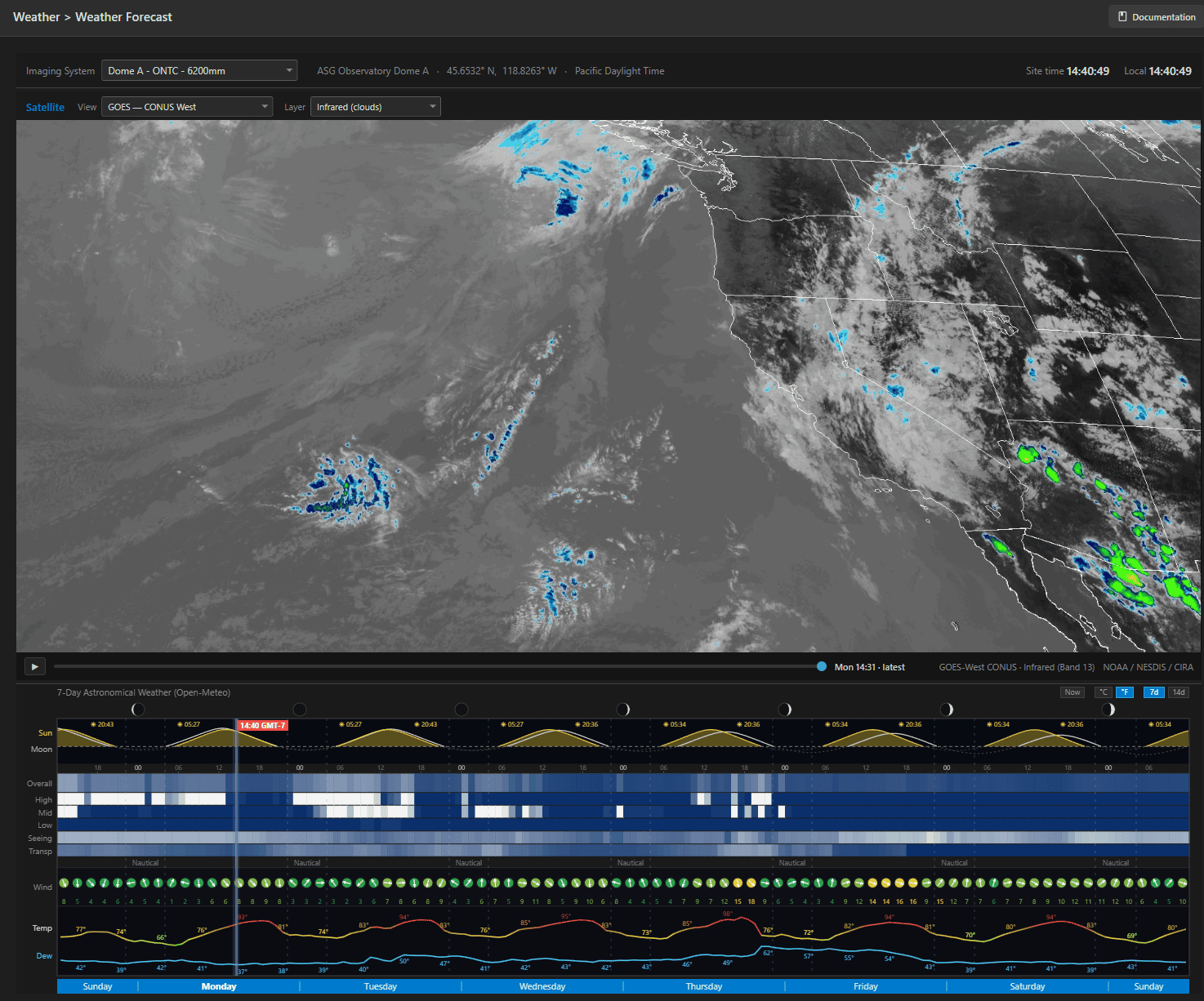
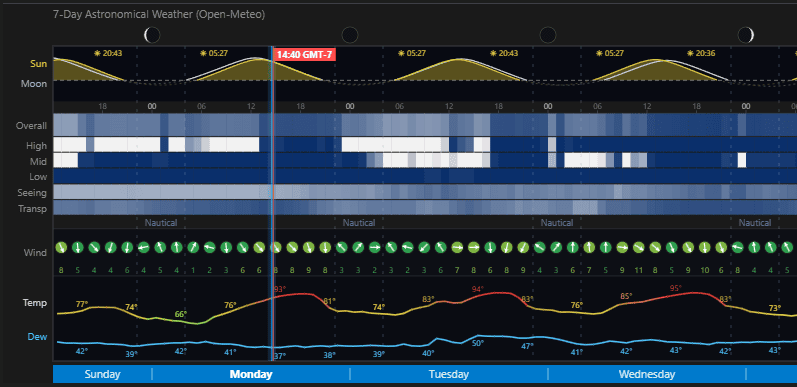
The forecast chart stacks everything an imager cares about into one scrollable view, top to bottom:
- Sun & Moon – altitude waves with rise and set times, and a moon phase icon over every night.
- Overall – the headline strip: one combined night-quality score weighing clouds most heavily, then seeing and transparency. Darker blue is better, in every strip.
- High / Mid / Low cloud – cloud cover by deck. Low cloud blocks, mid cloud dims, thin cirrus mostly softens – and the score weights them accordingly.
- Seeing & Transparency – estimated from jet-stream winds, surface gusts, atmospheric instability, humidity, and aerosol optical depth.
- Wind, Temp & Dew – direction vanes colored by speed, and a dew-point curve that shifts toward red as condensation becomes a real risk.
Tap or hover any hour for the exact numbers behind the colors.
Nights, Not Days
Ordinary weather apps split your imaging session across two calendar days. Astro PM arranges the forecast noon to noon, so each night sits whole in the middle of its column – never broken across a midnight boundary.
Dashed verticals mark your imaging window, from dusk to dawn, using the twilight threshold your own targets at that site actually require – Civil, Nautical, or Astronomical. The window on the chart is the window the scheduler will use.
A red now marker shows the current moment, labeled with the site’s local time – handy when the observatory sits in a different time zone than you do.
Watch the Sky Actually Move
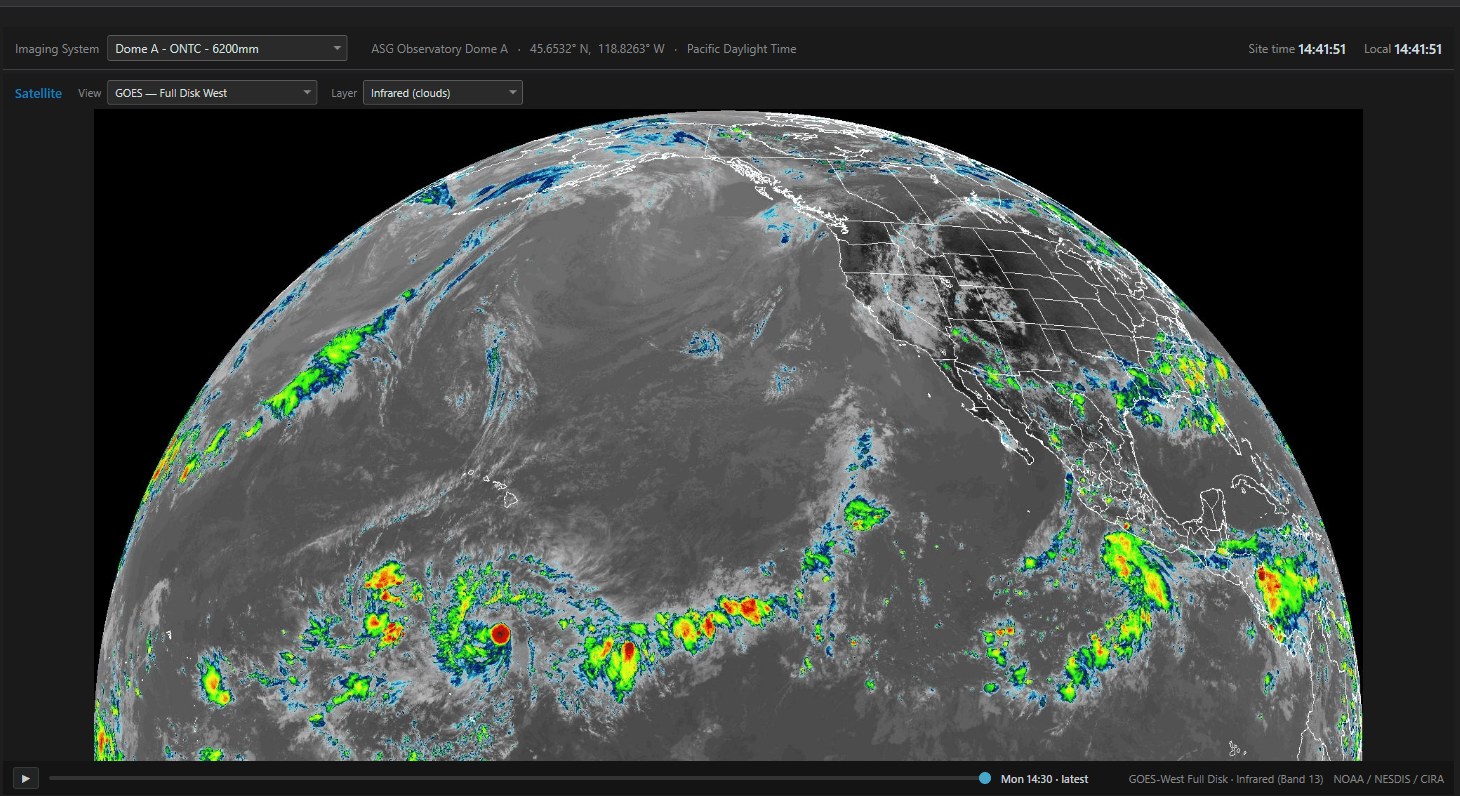
Forecast models predict; satellites show. The built-in GOES satellite player loops recent imagery centered on your observing site, with a scrubber to step frame by frame and watch cloud systems build, drift, or dissolve in real time.
The player stays synced to the forecast chart – scrub the satellite loop and the chart cursor follows, so you can compare what the model promised against what the sky is actually doing.
It’s the difference between hoping the clearing trend is real and watching it arrive.
Scored Like an Imager Thinks
Raw model output isn’t a decision. Astro PM condenses it into three ratings that map directly to what your subs will look like.
Overall
One combined night-quality score, weighing cloud cover most heavily (60%), then seeing and transparency (20% each). Scan two weeks of nights in a glance and know which ones deserve a plan.
Seeing
Estimated from jet-stream and mid-level winds, surface gusts, and atmospheric instability - a forecast of how steady your stars will be, not just whether the sky is clear.
Transparency
Derived from humidity and aerosol optical depth - the haze, smoke, and moisture that flatten contrast on faint targets even under a technically clear sky.
The Same Forecast, Everywhere You Plan
One forecast engine, one scoring model, three places to read it – so the chart you check from the couch always agrees with the one on the observatory machine.
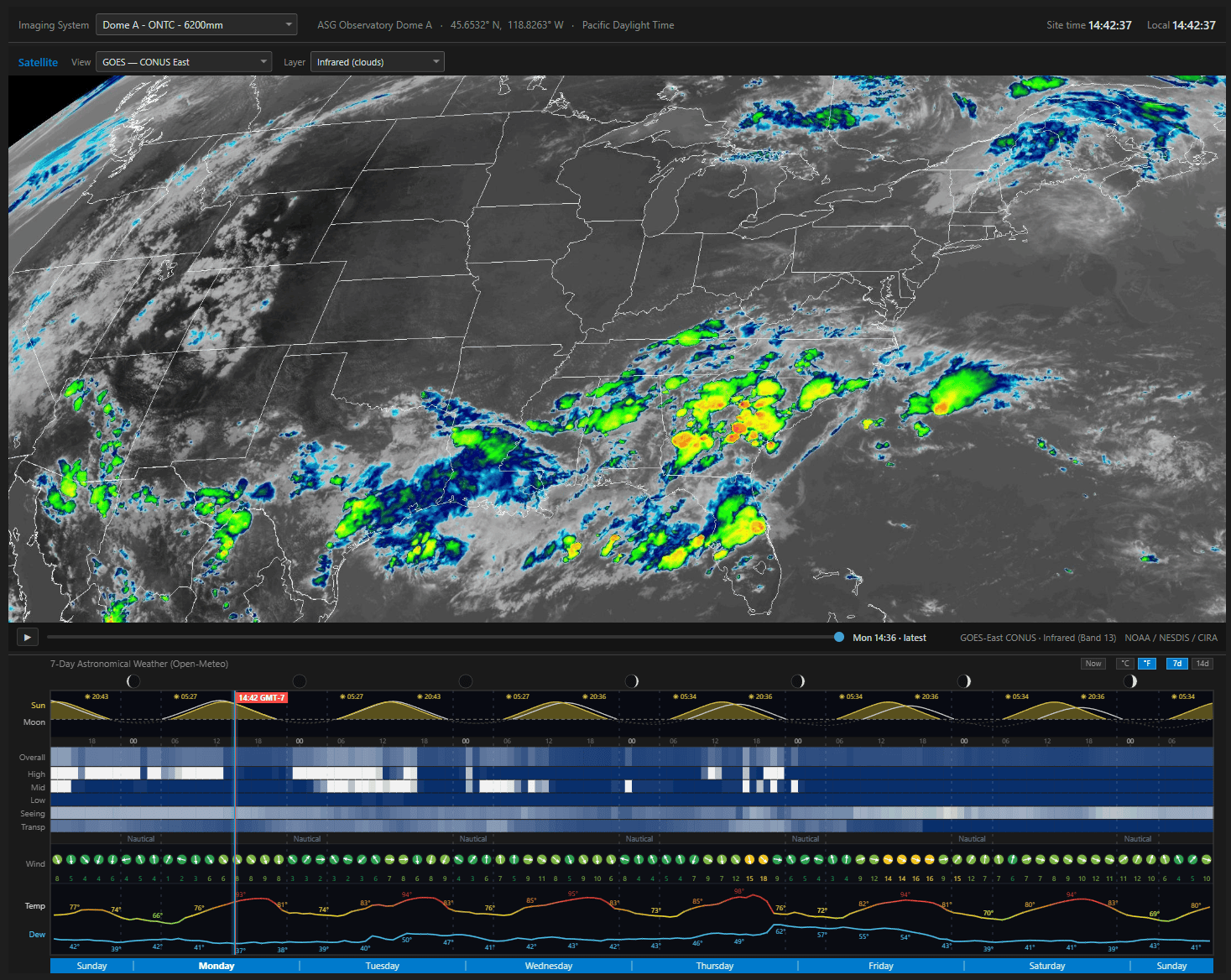
The Weather Panel
The full forecast for every observing site in your equipment library, with 7-day and 14-day views, a °C / °F toggle that remembers your choice, and the GOES satellite player alongside the chart.
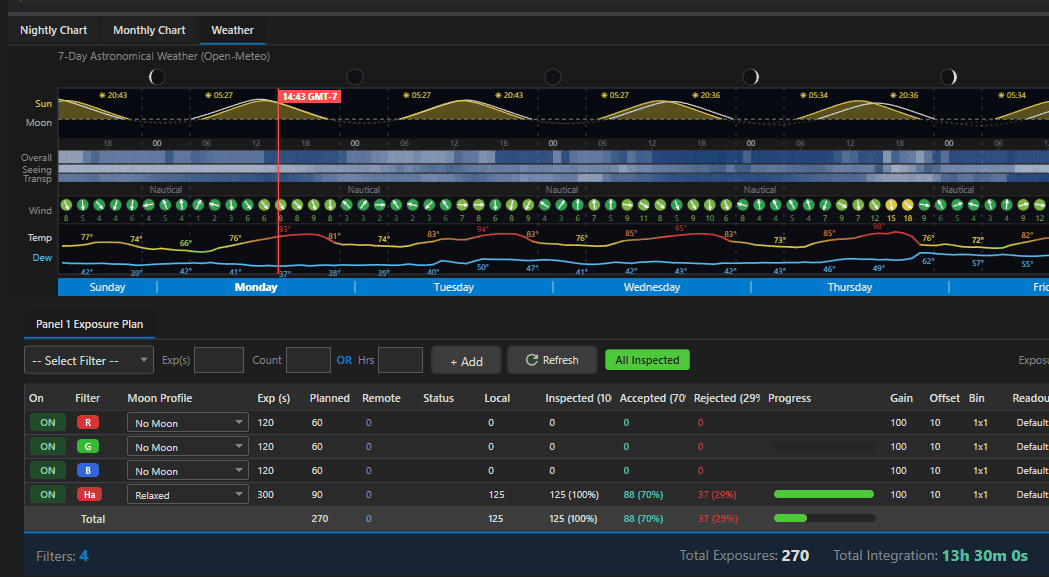
In Every Project
Each project carries its own Weather tab, already tuned to the project’s observing site – so while you’re planning a target, the nights that can actually deliver it are one click away.
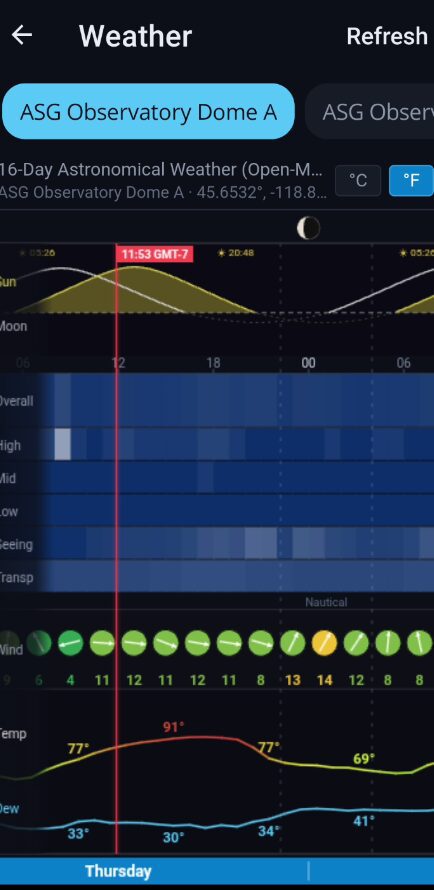
On Your Phone
The Astro PM phone app puts the same 16-day forecast in your pocket, with a site chip for every imaging system in your cloud account and tap-for-details on any hour of any night.
Serious Data Underneath
Forecasts come from Open-Meteo’s commercial API, pinned to a consistent global model so day-to-day comparisons stay honest. Data is cached per site for instant switching between observatories, and a refresh is always one click away. No accounts to create, no third-party weather app to juggle – it’s simply part of Astro PM.
Stop guessing about tonight.
Weather forecasting is built into every copy of Astro PM – desktop, project planner, and phone. Download the free trial and see your next two weeks of nights the way an imager should.